Monday, December 19, 2011

Memory Power by Yoga

YOGA AND MEMORY:

Yoga is an ancient Hindu discipline. The goal of Yoga is union with the higher consciousness.

Understanding ‘Memory’

Memory is the capacity to retain and recall information about past and present incidents. Memory capacity is the ability to analyze and synthesize the assimilated information and not information storage alone. Memory power varies between individuals.

In Sanskrit, the word ‘Memory’ is called ‘smriti’ The yoga sutras of Patanjali describe memory as ‘an experienced object not being lost from the mind.’

Yoga and Memory: The Indisputable Link

While memory is the latent capacity to retain and recall information, yoga assists in improving memory power through yogic techniques of concentration and meditation. The brain functions of attention, cognition, processing of sensory information and visual perception are honed with yogic practices.
Yogic practices like asanas, pranayama, meditation and Om chanting increase the circulation of blood to the brain. This help calm the mind and enhances concentration skills. Memory lapses can also be prevented through yogic practices that enhance the power of recall. One can draw upon the immense power of the mind with consistent yogic endeavor

“Memory is the measure of ability to reproduce the knowledge that is known”, says Yogacharya Vishwas.

“Memory is holding on to that which has been known.”- The Hindu Texts.

“Memory is the calling up of an object from past experience,” say Patanjali Sutras.

The magic of hatha yoga

Hatha yoga is a gentle form of yoga that consists of asanas, pranayama, meditation and chanting to achieve clarity of the mind that translates into all round good health. Memory power is given a boost, while also improving the ability to maintain focus and concentration.

Yogic components that improve memory

Asanas: The inverted postures nourish the brain with increased blood supply and supply of oxygen to the cells that help in developing memory:

Pranayama: Deep breathing exercises that help in the increased flow of prana and oxygen to the body parts and the brain, enhancing memory power

Meditation: Helps to clear the mind of unwanted thoughts and reduces excessive thinking. It is said that excessive thinking saps the mental energy of a person. Daily meditation helps to keep the mind calm and free of tension. Meditation on the third eye or on the point between the eyebrows helps to activate the brain and develop memory power.

“Om” chanting: – The vibration of Om recharges the cells and organs of the body with energy. It is said that 30 minutes of Om chanting helps to rejuvenate our consciousness and improve memory power.

How?

AUM – Utterance of A affects the spinal cord.

Utterance of U affects the thyroid glands.

Utterance of M affects the brain and its centers.

This practice enhances the efficiency of the brain cells, thereby improving memory power.

Yogic Practices in Detail

Asanas

Asanas are not aimed at mere toning of the physical body; they are designed to activate the energy channels in our body, thereby empowering the body from within.

During asana practice, it is important to focus the eyes at the point between the eyebrows, which promotes memory power. One must gently do away with restless thoughts and be aware of the movements of the body.

Please refer my older posts for the following pose picture.

Vrikshasana or the tree pose: This asana is practised in a standing posture, and benefits the ankle and the knees while also developing memory and concentration.

Steps:

Stand erect.
Lift the right leg, bend it at the knees and place it on the left thigh.
Bring your palms close to your chest as in a prayer position.
Shift your gaze to a point on the floor and stare.
Hold this position for a few breaths and relax while returning to the original position.
Repeat the same with the other leg.

Natarajasana or the dancer’s pose: This pose enhances balance, memory, focus and concentration.

Steps:

Stand erect. Bend the right knee and hold the knee at the ankles with your fingers.
Inhale as you lift the left arm straight above the head.
Exhale as you pull the right leg up and away from the body.
Then fix your gaze steadily at a point on the floor for a few breaths.
Repeat the same with the other leg.

Pranayama

It is apt to quote the Patanjali sutras that say , “The mind becomes calm by regulating the expulsion and retention of the breath”. Yogic breathing is a powerful tool to bring in more oxygen to the brain and blood. This facilitates in the development of memory and concentration.

Yogic breathing – Anuloma Viloma

Anuloma Viloma is also called alternate nostril breathing. Insights into the yogic texts describe the presence of the Ida nerve current, which flows through the left nostril and the Pingala current, which flows through the right nostril. It is said, that the breath flows through the right nostril for one hour, and then through the left nostril for another hour. Any alteration in this pattern of the flow of breath results in disease.

Steps:

Sit in a comfortable position and relax all the muscles of the body.
Exhale deeply through both nostrils.
Close your right nostril and inhale through the left nostril. Next, gently close the left nostril and release or exhale the breath through the right nostril. This constitutes one cycle of breathing practice.
Close your left nostril and inhale through the right nostril. Close the right nostril and exhale through the left nostril. This makes another cycle of breathing exercise.

Note: Breathing should be normal, regular and deep during the practice.
Practice of this exercise calms the mind, and prepares it for deep meditation.

Meditation

Finding peace amidst the hustle and bustle of daily life, meditation is a time-tested method to experience the divine presence or consciousness within. An intense feeling of inner peace and abounding bliss envelops the being after deep meditation. It also helps in developing a non-judgmental attitude towards people and situations. Meditation on the third eye helps develop memory power.

Steps

Sit in a cross-legged position.
Close your eyes and fix your attention at the point between the eyebrows. By focusing on this inner vision, we achieve clarity and creative insight.This chakra is also called Ajna chakra and the colour it radiates is emerald green. Focus your concentration on this center and feel the energy it radiates.

Benefit: By focusing on this inner vision, we achieve clarity of thought and purpose. The power of creative insight is also honed through this technique.

MEMORY, CONCENTRATION AND FOCUS:

1) Asana – Yoga Postures: includes using a gazing point (drishti) while performing balancing postures, spine lengthening exercises and inverted postures (like the headstand). Using the drishti improves focus and concentration while the exercises stimulate the nervous system. In Asana practice we focus on our physical body and the breath thereby improving concentration and focus.

2) Pranayama focuses on breathing techniques and mastering the life-force. These not only help with focus and concentration but also help more oxygen reach the brain. In pranayama, the mind is focused on the breath as it flows in and out of the body. Oxygen and pranic energy are also increased in the body and brain by the regulation of breath. Thus, pranayama increases focus and concentration as well as nourishes the brain. Pranayama is greatly beneficial in improving memory power. In pranayama, the psyche of the individual is concentrated on the breath as it courses in and out of the body. Hence, pranayama modifies concentration and focus in a positive manner as well as nurtures the brain.

3) Dharana quite specifically is the process of holding the mind to one place, object or idea. Dharana techniques are specifically designed for the mind. It works on focusing concentration and attention rather than letting the mind wander. This kind of focused attention is a form of mind training as it becomes easier to concentrate and remember as you practice more.
Dharana, or the practice of focus and concentration, affects and reduces the occupied mind. The mind is kept firm at one place instead of letting it wander here and there. This reduces strain on the mind. Mental strength increases. With such habitual focus and concentration, the work is done effectively and efficiently. The daily practice of dharana reduces the wavering attitude of mind and a different kind of mental clarity can be observed throughout the day. Dharana acts upon and cuts down the stress of the preoccupied mind.

4) With Dhyana (meditation) we develop awareness. If you can make the time to take care of yourself by meditating for just 20 minutes a day, know that these efforts can help you to improve memory and concentration. A calm and well rested mind (as opposed to an agitated, overworked mind) is much more agile and flexible.

Meditation takes dharana even further as it calls for intense mental focus and concentration. During meditation you empty the content of your consciousness completely. Dharana quite specifically is the process of holding the mind to one place, object or idea. Eliminating all extraneous thoughts gives your mind some much needed rest.

Meditation is a maneuver beyond the art of Dharana, calling for even more psychological and intellectual diligence and concentration. The art of meditation either by itself or in alignment with yoga asana and pranayama clears the mind of unreasonable and superfluous thoughts. Unrestrained thinking eats up mental energy and clouds the mind from interpreting and perceiving things clearly. In Yoga, meditation helps to energize the brain as well as get the mind to focus and concentrate.

5) Self Affirmations: The next key factor to improve memory and concentration is the power of positive thinking. Self-affirmation can stimulate your brain and give you the boost that you need to focus and concentrate better. It has been proven to work.

Saying positive phrases to yourself over and over again will unconsciously help you to convince yourself of its truth. There is no greater power than believing in yourself to improve memory and concentration.

Friday, December 9, 2011

Yoga Tools

YOGA EQUIPMENT & TOOLS OVERVIEW

Yoga Equipment, Tools, and Props may not be required when practicing Yoga but they have always been useful aids to practitioners. Take note that it is essential to feel relaxed and comfortable when doing the poses. Most Yoga Tools are designed to provide extra support to help you get deeper into a pose or do the pose better.

YOGA MATS:

Know the features of a Yoga Mat, how to take good care of it, and choose the mat that will make Yoga more effective and fun for you.


Ashtanga Mats - These tightly woven Yoga Mats are made of cotton and are ideal for Ashtanga Yoga, Bikram Yoga, or any form of sweaty Yoga practice because traction on Ashtanga Mats are activated by the moisture build up from sweat or water. The Ashtanga Mat also provides extra cushioning for Seated Postures and better stability for Standing Postures.

Travel Yoga Mats - These are ideal for people who are on the go. These lightweight, highly portable Travel Yoga Mats easily fold and fit in most luggages without hassle.

Universal Yoga Mats - These are the most commonly used Yoga Mats. These are favored by both Yoga students and instructors. Although a Universal Yoga Mat has a high-tack and sticky surface, it is still lightly textured, allowing a smoother, softer feel for you.

Deluxe Yoga Mats - A Deluxe Yoga Mat is a more enhanced form of the Universal Yoga Mat.

Utopian Yoga Mats - These are the probably the best Yoga Mats today. The Utopian Yoga Mat offers only perfection in every aspect: cushioning, durability, and stability. Compared to its counterparts, the Utopian Yoga Mat restores its form faster, hence making any body impressions on the surface disappear quickly. The only downside is that it is heavier and a lot more expensive than the conventional, easy to use Yoga Mat.

Beginner Yoga Mats - These are balanced in every aspect and can be the beginners' initial and temporary mats until they reach the advanced level of Yoga.

YOGA MAT BAGS:

Place your mat in a Yoga Mat Bag when traveling or when it is not in use. You will find that you can extend the life of your mat by taking good care of it.

The Yoga Mat is the most common tool used in a Yoga session. It provides traction to prevent you from slipping when doing a pose. It also serves as a cushion so you will not lie on the hard, cold surface when doing Supine Poses or the Savasana.


Since the Yoga Mat is very useful and important in practicing Yoga, make sure to take good care of it. Aside from cleaning it properly after every use, put it in a Yoga Mat Bag to keep it protected while you are traveling or when the mat is not in use.

There are different kinds of Yoga Mat Bags. Some have adjustable straps and zippers, while others offer additional features such as enough space or pocket for your other belongings. You can choose a bag that provides just the right space for your mat, or if you use other props in the class such as Yoga Straps or a towel, there are mat bags that offer enough room for all your items. Choose a Yoga Mat Bag that is lightweight, durable, and has adjustable straps so you will be comfortable when the bag is worn over your shoulder.

Nowadays, Yoga Mat Bags come in different designs with colorful prints that allow you to carry your mat and props in style. Keep in mind, though, that what's more important to look for in a Yoga Mat Bag is its functionality.

Place your mat in a Yoga Mat Bag when traveling or when it is not in use. You will find that you can extend the life of your mat by taking good care of it.

YOGA BOLSTERS:

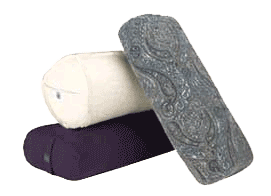
Yoga Bolster can aid Yogis to properly align the body. It also adds comfort and relieves tension in the lower and upper back, neck, abdomen, or legs during difficult poses.

Yoga Bolsters are shaped cushions which are used in different Styles of Yoga like Bikram Yoga, Ananda, and Kripalu Yoga. Basically, they are designed to provide support for certain parts of the body (particularly the back, abdomen, or legs) so that Yogis could pull off some Yoga Poses easier and more comfortably.

Yoga Bolsters are very useful in performing passive and Supine Postures. In instances when a Yogi needs to properly align the body and stack the Spinal Vertebrae, a Yoga Bolster would act as a support to straighten even the most stubborn backbone.


Other than support, a Yoga Bolster used with a Yoga Mat can also serve as a cushion for the lower body making your Yoga Session more comfortable. This could also be used to relieve tension in your lower and upper back, neck, abdomen, or legs in practicing difficult poses.

Yoga Bolsters also come in a variety of shapes, sizes, colors, and materials designed to fit your need and preference. However, you should know which type of Yoga Bolster suits you best as it also has different kinds. Each is unique with different purposes.

Here are some examples of Yoga Bolsters:

Cylindrical Bolsters - Can be used either perpendicular or parallel to the spine, or under the knees to lengthen the lower back. Cylindrical bolsters are also great supports for forward bends and for a whole lot of Yoga Poses.

Rectangular Bolster - This helps you relax and stretch your body in areas that need it most, usually under the knees or to relieve pressure on your lower back.

Breathing Bolster - This assists you to relax and breathe deeper easily. It is usually used to support the long muscles on both sides of your spine and enable them to relax fully. It can also be used as an inclined surface to allow the left and right sides of your chest to stretch and drop towards the floor, allowing slow and deeper breathing.

Zafu - This cushion is used to raise the hips, rendering any type of cross-legged sitting position more stable. This is ideal for people who practice Yoga Meditation.

This Yoga equipment is also best used for Meditation. It can provide the comfort that you need when you are sitting down especially on a hard surface.

Yoga Bolsters are highly portable and can easily be stored at the corner of your room, in a drawer, or in a closet without taking much space. Be sure to check out our collection of Yoga Bolsters and other props in our Yoga Shop.


YOGA BLANKETS:

It is essential to feel relaxed and comfortable when practicing Yoga. Together with a Yoga Mat, use a Yoga Blanket to keep you warm during a class or session.

Yoga is becoming more and more popular in the United States and in other countries throughout the centuries. Its benefits are being sought from Healing Major Illnesses, to improving disposition, to improving sex life. Yoga is a science that aims to create a union between the three aspects of a person - the body, the mind and the soul. It developed different practices that will help achieve this goal, from the execution of different Physical Postures, performing Breathing Exercises, and Meditating. 
 
Different Styles of Yoga also appeared over the years, following the same goal but with difference in the emphasis and modification of the various practices: Bikram Yoga uses heat together with the Asanas (Physical Postures) and Pranayamas (Breathing Exercises). Kundalini Yoga emphasizes on the Breathing and Chanting. Viniyoga or the Yoga of Wellness concentrates on developing practices for individual conditions and purposes.


Together with the evolution of the practices, came the development of the different Yoga Props which aim to help each practitioner achieve the utmost result of the Yoga Practice. Among the Yoga Props is the Yoga Blanket. This helps you feel relaxed and comfortable which is essential in the practice of Yoga. Yoga Blankets provides warmth and added cushioning to your Yoga Mat. You can use your blanket to sit and lie on during a Yoga Class or Yoga Session. You can also use it to cover your body while doing the Corpse, Final Corpse Pose or Relaxation Poses, or whenever you feel cold. It can also be considered as the most versatile Yoga Equipment. Yoga Blankets can be used as substitute to the Yoga Bolster.

Yoga Blankets or Yoga Rugs are popular with practitioners of Bikram and Ashtanga Yoga. It provides extra height, absorbs sweat, and help you maintain a pose. These Blankets can also complement your Meditation practice by providing you with extra warmth when you need it the most.

Yoga Blankets can easily be stored in a bag making it easy for you to bring it anywhere. They can also be made of different materials like wool, cotton, polyester blend, acrylic, felt or a Mexican blanket blend. The Mexican Yoga Blanket is the most popular. These blankets are hand woven and ideal for placing onto Yoga Mats.

YOGA STRAPS:

Yoga Straps can either be made out of cotton or nylon. They are helpful when you are doing some poses and allow you to hold a certain pose longer.

One of the reasons why some people stay away from Practicing Yoga is that they think that are not flexible enough. Yoga is not about being flexible but about strengthening your body and your spine in all directions with the goal of creating a union between the body, mind and spirit. All that matters is for you to try to perform the pose the right way without pushing yourself too far. By doing this you will develop flexibility, strength and become more energetic.

You are not expected to do the pose perfectly on your first try. It takes time to master a Yoga Pose and requires a lot or perseverance and patience. You also have to remember that Yoga is not a competition. Do not push yourself too far. If you feel pain or discomfort as you push on a pose, pause or stop and try again next time. Yoga Props, however, are designed to help you in move deeper into a pose or perform a perfect pose.


Among these Yoga Props is the Yoga Strap which is highly beneficial for Beginners. Yoga Straps may either be made out of cotton or nylon. These allow you to grasp your limbs that you couldn't reach or hold the pose longer. Yoga Straps are particularly useful in bound poses when your hands could not reach the other or for poses wherein you need to hold your feet but could not reach it. It can be used to hold your leg in a Trikosana, stretch your shoulder in the Shoulder Stretch Exercise, and a lot of other Yoga Postures.

Yoga is a highly beneficial tool in achieving a healthier body, as well as a relaxed mind and deeper sense of self-knowledge. Practice may not be that easy especially for Beginners, but through perseverance and patience, you will be able to reap the rewards of Yoga Practice - a relaxed mind, healthier and more flexible body, and positive attitude towards life. It is also proven to be an effective stress management exercise and supplementary treatment to chronic ailments such as Asthma, Diabetes, Arthritis, and Hypertension.

YOGA BALLS:

The Yoga Ball, also called Fitness Ball or exercise ball, is another tool that will help you get the most out of your Yoga practice.

The Yoga Ball, also called a Fitness Ball or exercise ball, is another tool that will help you get the most out of your Yoga practice. Yoga Balls are usually made from durable vinyl and these come in different sizes - from 30 to 85 cm in diameter.

The use of a ball in Yoga combines the ancient practice and modern technique to create a workout that will improve stability, strength, and overall condition of a person. Doing different poses with a Yoga Ball enhances the Yoga practice and lets you create a total body workout since it allows you to engage in several muscle groups simultaneously. The Yoga Ball can provide the support you need when doing certain Yoga Poses such as Backbends and restorative postures. It also serves as an excellent cushioning base so you will feel comfortable during the stretching exercises.
Another good thing about the Yoga Ball is its versatility. It can be used not only in Yoga practice but also in training programs, Fitness workout, and Pilates. Whether you are a beginner or an expert, you can use a Yoga Ball to tone your muscles, maintain balance, and improve flexibility and strength.

The size of the Yoga Ball that you can use generally depends on your height. Choose the Yoga Ball that lets you to sit down on it with your feet flat on the floor and with knees bent at a 90-degree angle.


Get more out of your Yoga sessions by using a Yoga Ball. It is an effective and versatile tool that will turn Yoga into a more effective and fun activity that can be done by people of all ages.

YOGA CLOTHING:

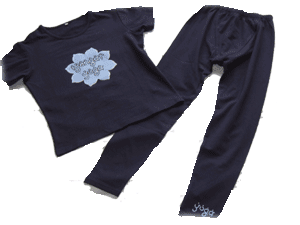
Yoga Apparel can provide maximum comfort and ease of movement. It should also be able to absorb sweat so you won't feel sticky and uncomfortable during your practice.

The practice of Yoga entails doing various types of body positions, ranging from subtle poses to more complicated ones. That’s why it is necessary to consider the kind of clothing to wear during Yoga practice so that you can get the most out of it. Here are a few things you may want to consider in choosing what to wear to your Yoga class: 

                                                
The main thing to consider is comfort. Your clothes should allow you to move freely. Otherwise they can obstruct the circulation of blood in your body. Try wearing loose clothing or clothes made of elastic materials like spandex. Aside from Yoga, you can also use this kind of clothing during your Meditation practice.

Consider wearing shorts. This way, you can see if you knees ankles and feet are properly aligned when performing Asanas.

For women, wearing a sports bra is recommended.

Traditionally, Yoga is performed on bare feet. However, for hygienic reasons, some prefer to practice Yoga in socks or shoes. This is acceptable for some Yoga instructors but not for others. So make sure to check up on this with your instructor before class begins.

Sweat absorption is another factor that you should look for in your Yoga clothing. A good idea is to wear shirts made of organic cotton, since they absorb sweat easily and also allows for maximum comfort and breathability.

Before heading to yoga class, put on your outfit and try out a few poses in them. See if it allows you to move freely. Make any necessary adjustments or changes.

How you look in your clothes is also important. Knowing that you look good in your clothes will make you feel more positive about yourself, and a positive outlook can help you succeed in Yoga.

Refrain from wearing jewelry during Yoga practice.

These are just some tips to help you choose the right set of clothing for your yoga practice. Follow them and you’re on your way to getting the full benefits of your Yoga practice. And a constant practice of Yoga will lead you to a healthier and more meaningful life.

There are many tools, props, and pieces of equipment designed for Yoga, Meditation, and other related practices. In general, it is a matter of preference or need. Use only the tools or props that are suitable to the Yoga Poses that you do.

Saturday, November 26, 2011

Increase Height


YOGA TO INCREASE HEIGHT:

For centuries people have used the techniques of yoga to improve their body and overall well-being. Yoga stretches your entire body, and especially your spine, and gives it the balance and strength it needs to grow.
If you are someone who is wondering how to gain height naturally, you should consider an exercise program that involves yoga.

Yoga is a series of fluid movements that centers your body. The focus is to create flexibility while controlling your breath. This flexibility and control helps you with gaining height on many levels.

Yoga stretches your body, especially your back, through its full range of motion. This helps your body fully decompress from the downward pressure of gravity that causes you to actually shrink.

Once your body is relieved of this strain, the cartilage in your back and joints can start to lengthen and thicken which makes you taller.

Furthermore, the deep inhalation and focus of yoga helps your body relieve the stress that causes tension in your back muscles. This tension would normally hinder growth, but with these height gain exercises you can overcome it.

Additionally, yoga strengthens your spine which improves your posture. If you want to know how to gain height, you should know that it all begins with good posture.

People have the ability to get a height gain of several inches just by having the correct posture. A spine which is aligned is then prepared to grow longer.

In this article, we will show you how to gain height through three specific yoga exercises. These three vary in degree of difficulty, so that you can start with the grow taller exercise that is best for you.

Also, it is important that you always check with your physician before beginning this, or any, exercise plan.

SUKHASANA:

The first exercise is called the Sukhasana and it is the “centered” position from which all other yoga moves originate.

It is important that you learn this position because it will help you control your breathing and make you better aware of your body.  Furthermore, it tones your lower back and hips, helping the cartilage in those areas to decompress.

You will want to sit on the floor in a cross-legged position, your hands resting on your knees.


Focus on controlling your breathing so that it is deep and at an even pace. Keep your spine perfectly aligned and push your buttocks to the floor and gently lower your knees.

Take several, at least 5, deep breaths and then inhale as you raise your arms upward and over your head. Bring your arms down gently and steadily, exhaling as you do, and then repeat this entire move 5 to 7 times more.

TRIKONASANA:

This is also called the Triangle, is the second yoga exercise we will discuss. This is slightly more advanced than the Sukhasana.

It will help improve your balance and therefore help you have good posture.  Also, it is a very good exercise to use if you want to center yourself and relieve tension.


To begin, stand up with your legs about 3 to 4 feet apart and your feet parallel to one another. Then, rotate your left foot 90 degrees to the left and your right foot 45 degrees inward. Inhale and raise your arms to the side so that they are level and parallel to the floor. Exhale and turn your head to face down the length of your left arm and check that your left knee is lined up with your left ankle.

Take one deep breath and then stretch towards your left ankle while you tilt your left hip down.
Once you have reached your maximum stretch, rotate your arms so that your left hand can now rest against the inside of your calf and your right arm points towards the ceiling.

Turn your head so that you are looking in the direction of your right arm and take several deep breaths.
Then, inhale and straighten your body followed by an exhale as you lower your arms to your hips.
Pivot on your heels and face forward once more. Then, repeat this movement on the right side of your body .

CAT AND CAMEL:

The Cat and Camel movements are very popular exercises because they extend your spine fully in two different directions.

This extension will stretch every cartilage disc in your spinal column.  While these are typically two separate movements, we are combining them together so that your body can get the maximum flexibility and height gain.


You will begin the exercise on your hands and knees with your hands slightly ahead of your shoulders and knees hip width apart. Inhale and tilt your pelvis up and curve your spine so that your stomach drops towards the ground and your head is up.

Fully stretch your body, but gently, and then move into the cat position by reversing the curve of your spine.
You should finish with your pelvis down and chest and stomach in. Move your body through this movement fluidly, repeating the full cycle many times .

Saturday, November 12, 2011

Pregnancy


YOGA FOR PREGNANT WOMEN:

For the first trimester, standing Yoga Poses are advised as this will help strengthen the legs, promote Circulation, generate energy, and may reduce leg cramps. It is also advisable to do some stretching such as the hamstrings stretch to avoid Sciatica. During the second and third trimester, you may reduce your time spent for practicing the Asanas to prevent fatigue and overwork. It is also not advised to practice from the tenth to through the fourteenth week of Pregnancy since these are crucial times. Supine poses, backbends, and twisting can also be done with modification or if the body is on an incline. Do not overstretch the abdomen; the emphasis of your twisting poses should be on the shoulders and the upper back and not on the abdomen. Avoid doing inversion poses though some experience Yoga practitioners usually still feel comfortable doing this until the seventh month.

The following are the Yoga Poses that can help you in dealing with the symptoms of Pregnancy, ensuring smoother and easier delivery, and faster recovery after childbirth. Poses that put pressure on the abdomen and other difficult poses should not be done during advance stages of Pregnancy. You do not have to do all these Asanas and remember not to push yourself on a pose.

Mountain Pose (Tadasana)

The Mountain Yoga Pose promotes the experience of stillness, strength, relaxed power, and immovable stability associated with mountains. This yoga posture, and coming back to this stillness after other poses, is one of the ways of becoming acquainted with stillness.

                                                                 
Triangle Pose (Trikonasana)

In Hindu art, the triangle is a potent symbol for the divine principle, and it is frequently found in the yantras and mandalas used for meditation. The Trikonasana or Triangle Pose concludes the Yoga Postures in our basic session.
                                                  

Warrior Pose

The Warrior Pose stretches and strengthens the arms and legs, increases stamina, improves balance and concentration, and can also relieve backaches. If you are suffering from diarrhea, high blood pressure or neck problems, you should take extra caution practicing this pose.


Standing Side Stretch Pose


The Standing Side Stretch is another Yoga Pose with two lines of energy radiating outward from your center. This is a simple Yoga Posture with a wonderful stretch in which one line of energy reaches upward from your belly and outward through the arm, and one line travels downward through the legs.


Standing Spread Leg Forward Bend


Practicing the Standing Spread Leg Forward Fold can strengthen and stretch your inner and back legs and your spine. People with lower back problems should avoid doing the full forward bend. For beginners, you may use props like a folding chair to support your forearms.


Seated Forward Bend (Paschimothanasana)


Relax your body and mind, stretch your hamstrings, shoulders, and spine, relieve stress, and improve your posture and concentration by practicing the Seated Forward Bend.

Hero Pose (Virasana)

One of the fundamental seated postures is the Hero Pose. This serves as the initial position for several Asanas. It strengthens the arches of the feet, stretches the ankles, and improves posture. This Yoga Pose is ideal for people who have flat feet.


Spread Leg Forward Fold (Upavista Konasana)

The Spread Leg Forward Fold is a Yoga Posture which works primarily on the hamstrings and adductors. This energizes the body and promotes inner calmness.


Fish Yoga Pose

Doing the Fish Pose relieves stiffness of the neck and shoulder muscles and improves flexibility of your spine. It is the counter-pose of the Shoulderstand. Hold the Fish Pose for at least half the amount of time you spent in the Shoulderstand in order to balance the stretch. 
                                                            

Cat Pose (Bidalasana)


The Cat Yoga Pose teaches you to initiate movement from your center and to coordinate your movement and breath. These are two of the most important themes in Yoga practice. Keep in mind that the Cat Pose may not be advisable if you have any chronic or recent back pain or injury.


Tree Yoga Pose

The Tree Pose helps strengthen your thighs, calves, ankles and back. It can also increase the flexibility of your hips and groin. Your balance and concentration can also be improved with constant practice. This Yoga Pose is recommended for people who have sciatica and flat feet. 


Plough Pose (Halasana)

The Plough Pose stretches your spine, thus, improving spinal flexibility. It benefits the thyroid gland and abdomen, eases tension in the shoulders and back, and reduces stress.


Corpse Pose

The Corpse Yoga Pose is considered as a classic relaxation pose and is practiced before or in between Asanas as well as a Final Relaxation. While it looks deceptively simple, it is actually difficult to perform.


Ujjayi Breathing Technique

According to the ancient yogic text, Ujjayi can help protect you from a host of diseases by getting rid of excess phlegm, wind or bile.
                                 

Wednesday, October 26, 2011

Back Pain


YOGA FOR BACK PAIN:

There are various poses for the back pain. Main ones are listed below. In Each and every pose, stay for few seconds as possible as you can.

 - savasana (corpse pose)
 - Marjariasana (Cat and Camel stretch pose)
 - Tadasana (Palm tree pose)
 - Matsyasana (Fish pose)
 - Shalabhasana (Locust pose)
 - pavanamuktasana (Wind Releasing pose)


Come on lets look into all these asanas in detail with the picture.

SAVASANA:

Lie flat on your back in a relaxed position, armsresting at your sides, palms down, and legs lying naturally, with knees turned out slightly. Breathe in and out for a few seconds while allowing any tension to leave the body.

MARJARIASANA:

Start out on your hands and knees with a flat back. Your hands should be directly under your shoulders with fingers spread. Knees should be directly under the hips.Head is held loosely so that you are looking at the floor between your hands. Inhale nicely as shown in the first picture. As you exhale, arch your back toward the ceiling, tuck your chin in to your chest so that you are looking at your navel, and tuck your tailbone underneath as shown in the second picture. Hold, then release back into your original position which is the first one.


TADASANA:

Stand with feet facing forward, arms at your sides, weight distributed evenly on both feet. Raise both arms over your head, join your hands so that your fingers are facing upward. Stretch your arms upwards, and at the same time, come up onto your toes if you can do so without pain. Stretch your entire body upward and hold, if you can.


MATSYASANA:

Lie on your back with arms at your side. Arch your back as far as you comfortably can and raise it off the ground by pushing the floor with your elbows. If you can, tilt your head backwards and rest the crown of your head on the floor. Breathe deeply from the diaphragm and hold pose for one minute if you can.


SHALABHASANA:

Lie face down with arms at the side, palms down, and elbows slightly bent with fingers pointing towards the feet.Raise your legs and thighs as high off the ground as possible without causing your back any pain.Hold for one second and repeat up to twelve times.


PAVANAMUKTASANA:

Lie flat on your back as in savasana (the corpse pose). As you inhale, bend your knee, place your hands right below the knee, and draw your leg towards your chest. Your left leg should remain flat on the floor. Exhale and bring your forehead up to touch your knee. Inhale, and then as you exhale,return to your original position. Repeat with the other leg. At the same time you can even do with both the legs as shown below.


Hope the above exercises were beneficial for your back pain. All software engineers who keep sitting all the time can do these exercises to get rid of the back pain. Very effective poses and helpfull too.

Diabetes

YOGA FOR DIABETES:

Diabetes can be controlled by practicing yoga. The two main important asanas for diabetes are halasana and sarvangasana. If you practice this daily easily you can cure diabetes. Lets see how the two asanas are performed.

HALASANA:

Jut try to be in a sleeping position and then try lifting your legs up and then slowly place it back and touch the ground. Thats all about this asana. First it will be some what difficult but when you keep trying daily you can easily do this asana.
SARVANGASANA:

This is also a sleeping asana. First be in a sleeping position and then just try to lift your leg upwards and keep your leg straight by giving rest on your hand at your back as shown in the below picture. Hold for few minutes and then repeat the process as many times as possible.


The above two asanas are very essential for diabetes. People who have diabetes can follow these exercises and get rid of diabetic soon.

Tuesday, October 25, 2011

Irregular Periods


YOGA FOR IRREGULAR PERIODS:

For people who has irregular periods, they can do the following asanas for the regular periods. Its very helpfull. Comeon girls no worries. Practice this daily atleast three times a day. Try to increase the time limit day by day on each pose to get better results. The asanas to be followed are

     - Ardha Chandrasana - half moon pose
     - Paschimottanasana - seated forward bend
     - Janu Sirshasana - Head to knee forward bend

Now lets see how each asanas must be done to avoid irregular periods.

ARDHA CHANDRASANA:

Try to bend side ways and touch the floor with your hands. Lift your other leg and hand upwards as possible. You must do this either side and hold it for few minutes as much as possible.


PASCHIMOTTANASANA:

Follow the two steps as shown in the picture below. Hold your breathe when you bend fully for few seconds. Repeat this step as manay times as possible.


JANU SIRSHASANA:

This is somewhat similar to the above one. Only thing is you need to fold one leg and stratch the other one and need to touch the feet by bending our body. Follow up the below pose on both sides and hold as long as possible.
                                               
If you follow up the above asanas definitely you can come out of the irregular periods and you can start getting your periods regularly.

Fitness By Yoga

Appreciate your comments and more requests on yoga.

Thank you everybody who visit this blog.